


Rudy | by karafc



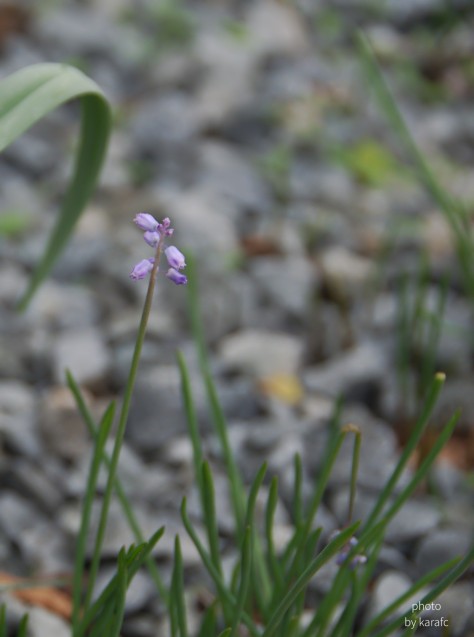
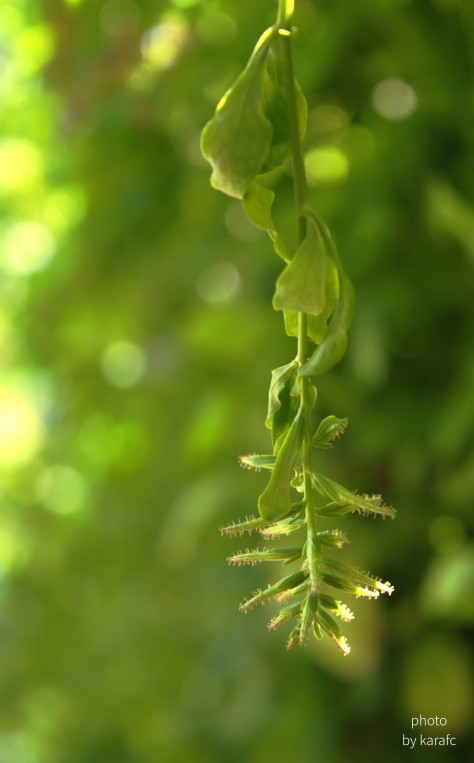
We have a garden full of seasonal and non seasonal plants and flowers and I still get surprised with the random flowers that happen to sprout – courtesy of the birds, I am sure. This fall I was intrigued with these small wildflowers that bloomed in different places throughout our back yard. Don’t be misled from the close up photo below, they are so small that someone might not even notice them.
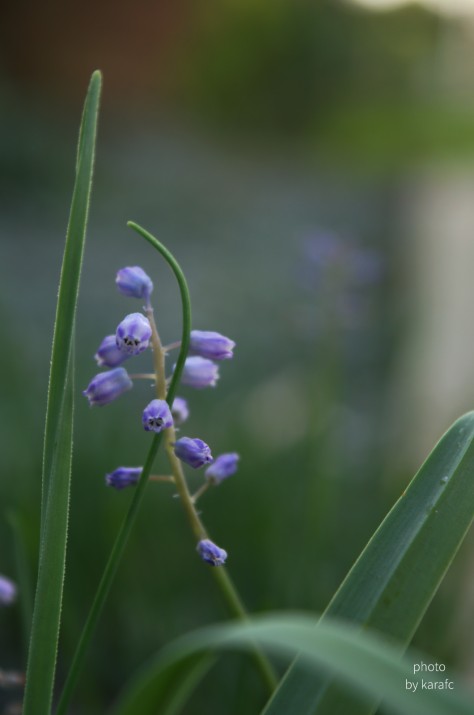
I had a hard time, not only shooting them because they are so tiny, but also figuring out what they are called.

Autumn Grape Hyacinth is the common name of Muscari Parviflorum which is a very fragile and delicate plant that moves with the slightest breeze. I tried several times to photograph them but with no success. At first it was my fault; I was always in a hurry or occupied with other things and I wasn’t able to focus on them.

“Those who don’t believe in magic will never find it.”
― Roald Dahl

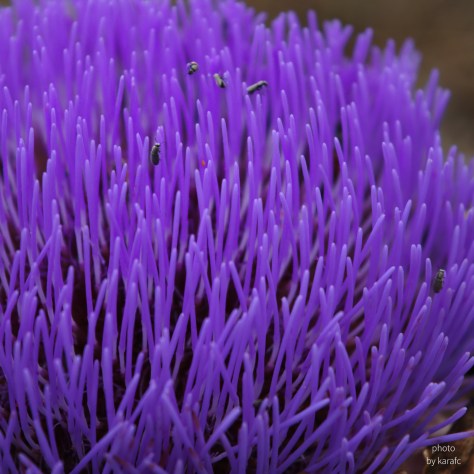
While I was trying to write a new post, I decided to organise my photo archive and found the photos of an artichoke flower that I shot last summer. I recall that I didn’t like them back then. There was something about it that was bothering me and I felt that its purple color was too bright. Maybe it just wasn’t what I was expecting at the time.

That day a family friend from Slovakia came to visit us and we went for a walk outside in the fields by the house. We stumbled upon this artichoke flower which looked really compelling and I took several shots. The next day our friend who was anxiously awaiting for the pictures, asked me if they were ready but I disappointed her by saying that I didn’t like them.

When I came upon them this time, I changed my mind. The color seemed just fine. I also noticed that there were tiny bugs and insects on the flower which I totally forgot they were there.

A whole microscopic world was gathered in that attractive purple artichoke flower!
This post is part of the Daily Post’s Weekly Photo Challenge: Tiny


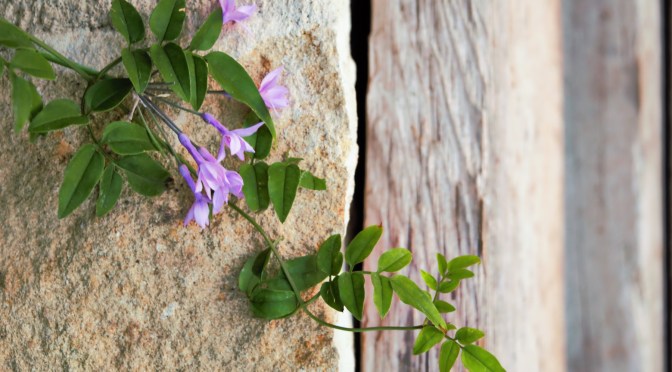
Every afternoon I take my daughter outdoors in her stroller for a walk in the garden. She enjoys it very much. I usually take my camera with us so I can take some photos of the flowers, plants and, needless to say, my daughter. While we were enjoying the fresh air and the birds tweeting, I noticed this pink flower, called Tulbaghia violacea (or society garlic or pink agapanthus), sprawled on a stone wall and underneath it there was an old plank. The composition was so beautiful that even though I didn’t have my camera with me, I decided to use my mobile.

As you can imagine, I returned there to shoot it again…twice! My poor little baby was very patient. At the end she fell asleep so I took her home and quickly grabbed my camera to go get some proper pictures of what held my fascination.

Even though I shot this flower several times before, this time it seemed different, so, being the inquisitive person I am, I looked closer to try and figure out why! And there it was, on the flower there was a creeper all over it which caused the pink agapanthus to sprawl on the stone wall, making it look like a pink jasmine.

The pictures below are from another shooting day and that it’s how it should look like.



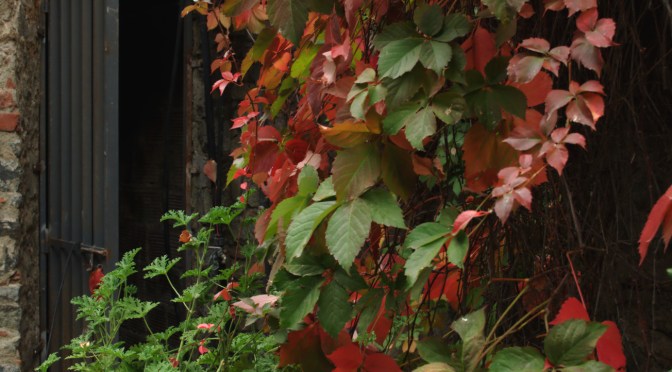
Quite recently, on our trip to Kakopetria village, I spotted this creeper on a house wall.
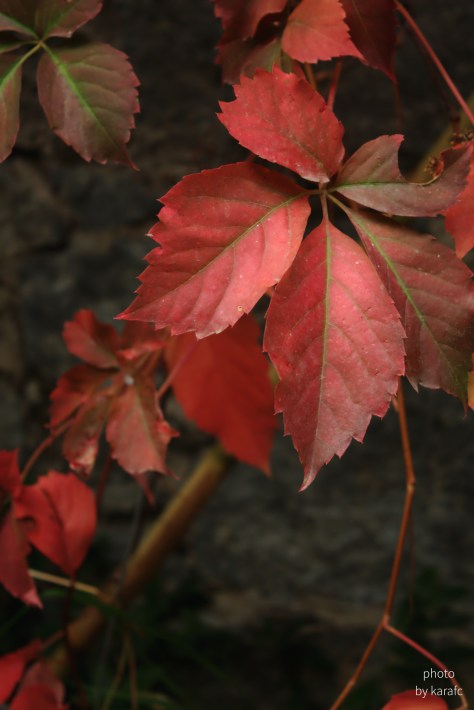
I have to say that, as much as I love shooting plants and flowers, I don’t know much about them besides the common ones. I thought it would be hard to find information about this creeper because I only had a picture and no clue what is called. So I searched for it as a red creeper in the web and I found it quickly.
Parthenocissus quinquefolia, known as Virginia creeper, Victoria creeper, five-leaved ivy, or five-finger. It is a prolific deciduous climber. It is grown as an ornamental plant, because of its ability to rapidly cover walls and buildings, and its deep red to burgundy fall (autumn) foliage.

An important information is that its berries are highly toxic to humans. On the other hand they are not toxic to birds, which provide an important winter food source for many bird species.
source: Wikipedia


 Creative View